

In today’s complex business environment, maintaining integrity and ensuring compliance are paramount. When internal issues arise, organizations often need to conduct thorough investigations to uncover the truth and take appropriate action. Reputable private investigation services specializing in internal company matters can provide the expertise and objectivity needed to navigate these sensitive situations effectively. These services are designed to address a wide range of concerns, from employee misconduct to fraud and regulatory violations, helping businesses protect their assets, reputation, and long-term sustainability.
Reputable private investigation services for internal company and business operations
Internal company investigation services are formal inquiries designed to determine if organizational policies, laws, or regulations have been violated. These services are crucial for uncovering facts, mitigating risks, and safeguarding an organization’s integrity. Investigations can be initiated for various reasons, including whistleblower allegations, shareholder demands, audits, or government subpoenas. They are essential for companies to obtain facts, allowing management to address issues promptly.
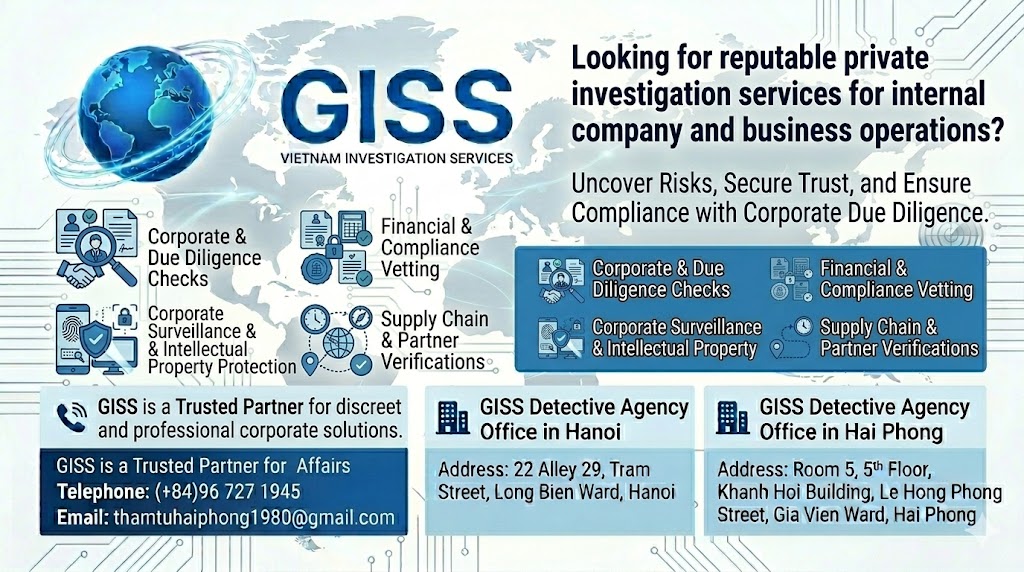
GLOBAL INFORMATION SUPPLY SERVICES COMPANY LIMITED (GISS CO.,LTD)
GLOBAL INFORMATION SUPPLY SERVICES COMPANY LIMITED (GISS CO.,LTD) is one of the company providing private investigation service. Contact Info Tel: (+84)96 727 1945 Email: thamtuhaiphong1980@gmail.com DETECTIVE AGENCY OFFICE IN HANOI Address: 22 Alley 29, Tram Street, Long Bien Ward, Hanoi DETECTIVE AGENCY OFFICE IN HAI PHONG Address: Room 5, 5th Floor, Khanh Hoi Building, Le Hong Phong Street, Gia Vien Ward, Hai Phong
Contact Information
When seeking internal investigation services, it’s essential to have clear and reliable contact information. This ensures seamless communication and efficient coordination throughout the investigation process. Look for providers who offer multiple channels of communication, such as phone, email, and secure online portals, to facilitate timely updates and address any concerns that may arise.
Types of Internal Investigations
Internal investigations can address a wide range of issues, including:
- Employee Misconduct: This is a common reason for investigations.
- Whistleblower Complaints: Companies conduct investigations in response to employees reporting potential violations of policies or laws.
- Fraud and Embezzlement: These investigations focus on financial irregularities, theft, or deceptive practices.
- Cyber Breaches and Data Mishandling: Investigations may be necessary for security incidents or the improper handling of sensitive company data.
- Due Diligence: This type of investigation is often conducted in response to regulatory scrutiny.
- Corruption: Investigations can uncover bribery, illicit foreign exchange, corporate fraud, and industrial espionage.
- Workplace Violence and Threats: These inquiries address incidents of assault, threats, harassment, or stalking within the workplace.
Each type of investigation requires a tailored approach, with investigators possessing the specific skills and knowledge to uncover the facts and provide actionable recommendations.
Key Benefits of Conducting Internal Investigations
Conducting internal investigations offers numerous benefits to organizations, including:
- Early Issue Identification and Resolution: Promptly discovering and addressing misconduct can minimize potential damage and prevent recurrence.
- Liability Reduction: An internal investigation can demonstrate a company’s good-faith efforts to comply with laws and regulations.
- Reinforcement of Corporate Governance and Ethics: Actively investigating wrongdoing signals a commitment to legal and ethical behavior.
- Information Gathering and Defense Strengthening: Investigations help collect evidence, which is vital for preparing defenses against litigation or regulatory actions.
- Informed Decision-Making: The findings from an investigation provide businesses with critical information for making strategic decisions.
- Minimized Disruption: A well-planned investigation can help resolve issues while causing the least possible disruption to operations.
- Potential for Government Cooperation Credit: Demonstrating cooperation and remedial actions can sometimes lead to leniency or reduced penalties from government agencies.
By proactively addressing internal issues, companies can protect their reputation, maintain employee morale, and ensure long-term sustainability. An effective internal investigation can also help prevent future incidents by identifying weaknesses in policies and procedures and implementing corrective measures.
Conducting an Internal Investigation
An effective internal investigation typically follows a structured process:
- Develop an Investigative Plan: This plan defines the objective, scope, key personnel, and timeline for the investigation.
- Information Gathering: This involves collecting relevant documents, emails, and other forms of electronically stored information.
- Conduct Interviews: Witnesses are interviewed in a private and respectful manner, using open-ended questions to elicit detailed responses.
- Analyze Findings: All collected evidence is thoroughly reviewed to determine the facts, identify involved parties, and ascertain whether any laws or company policies were violated.
- Report Conclusions and Recommend Actions: The investigation’s findings are clearly documented, and recommendations for corrective actions, policy updates, or disciplinary measures are provided.
Each step requires careful planning and execution to ensure the integrity and reliability of the investigation. A well-defined investigative plan helps maintain focus and ensures that all relevant areas are thoroughly examined.
Developing an Investigative Plan: A comprehensive plan is the foundation of any successful internal investigation. It should clearly outline the objectives of the investigation, the scope of the inquiry, the key personnel involved, and a realistic timeline for completion. The plan should also identify potential challenges and outline strategies for addressing them.
Information Gathering: Gathering relevant information is a critical step in the investigation process. This may involve collecting documents, emails, financial records, and other forms of electronically stored information (ESI). It’s essential to use appropriate tools and techniques to ensure that all relevant data is identified and preserved. Proper data collection techniques are crucial for maintaining the integrity of the investigation.
Conducting Interviews: Interviews are a key component of most internal investigations. Witnesses should be interviewed in a private and respectful manner, using open-ended questions to elicit detailed responses. It’s important to document all interviews accurately and to obtain signed statements from witnesses whenever possible. Interview techniques should be tailored to the individual and the nature of the information being sought.
Analyzing Findings: Once all the information has been gathered, it must be thoroughly analyzed to determine the facts, identify involved parties, and assess whether any laws or company policies have been violated. This may involve reviewing documents, analyzing financial records, and comparing witness statements. The analysis should be objective and impartial, based solely on the evidence collected.
Reporting Conclusions and Recommending Actions: The final step in the investigation process is to prepare a comprehensive report summarizing the findings and recommending appropriate actions. The report should clearly state the facts, identify any violations of laws or company policies, and recommend corrective actions, policy updates, or disciplinary measures. The report should be objective, impartial, and based solely on the evidence collected.
Important Considerations for Internal Investigations
Several important considerations should be taken into account when conducting internal investigations:
- Confidentiality: Maintaining strict confidentiality is crucial, with information shared only on a need-to-know basis.
- Objectivity and Impartiality: Investigations must be conducted neutrally and independently of any parties who might have a vested interest in the outcome.
- Timeliness: Investigations are time-sensitive. Prompt action is essential to preserve evidence and ensure the accuracy of witness accounts.
- Documentation: Meticulous documentation of every step is vital for legal defensibility and future reference.
- Legal Counsel: For complex cases or investigations involving senior management, retaining outside or employment counsel is often recommended.
These considerations help ensure that the investigation is conducted fairly, accurately, and in compliance with all applicable laws and regulations. Maintaining confidentiality is particularly important to protect the privacy of individuals involved and to prevent the dissemination of sensitive information.
Confidentiality: Maintaining confidentiality throughout the investigation process is essential to protect the privacy of individuals involved and to prevent the dissemination of sensitive information. All parties involved in the investigation should be instructed to keep the matter confidential and to avoid discussing it with others. Strict protocols should be in place to limit access to investigation-related documents and information.
Objectivity and Impartiality: Investigations must be conducted neutrally and independently of any parties who might have a vested interest in the outcome. This means that investigators should not have any personal or professional relationships with the individuals involved and should not be subject to any undue influence or pressure. If internal bias is a concern, it may be necessary to engage third-party investigators or outside legal counsel.
Timeliness: Investigations are time-sensitive, and prompt action is essential to preserve evidence and ensure the accuracy of witness accounts. Delays can lead to the loss of critical information and can make it more difficult to uncover the truth. Investigations should be initiated as soon as possible after the alleged misconduct is reported, and they should be completed in a timely manner.
Documentation: Meticulous documentation of every step in the investigation process is vital for legal defensibility and future reference. This includes documenting all interviews, collecting and preserving all relevant documents and information, and maintaining a detailed record of all actions taken. The documentation should be accurate, complete, and organized in a manner that allows it to be easily reviewed and understood.
Legal Counsel: For complex cases or investigations involving senior management, retaining outside or employment counsel is often recommended to ensure legal compliance and protect privileged information. Legal counsel can provide guidance on the proper scope of the investigation, the appropriate methods for gathering evidence, and the potential legal risks and liabilities involved. They can also help ensure that the investigation is conducted in a manner that protects the company’s legal interests.
When internal resources are insufficient or when impartiality is a concern, engaging third-party investigators or outside counsel can provide an objective and unbiased perspective. External investigators bring specialized expertise and experience, ensuring a thorough and credible investigation.
Conclusion
In conclusion, reputable private investigation services play a crucial role in helping companies maintain integrity, ensure compliance, and protect their interests. By conducting thorough and credible internal investigations, organizations can identify and address issues early, reduce liability, reinforce corporate governance, and make informed decisions. Whether it’s addressing employee misconduct, investigating fraud, or responding to regulatory inquiries, partnering with experienced investigators can provide the expertise and objectivity needed to navigate complex situations effectively.